The age of the gifted
The Night CleanerThe age of the gifted is the future Dorian proclaims in a televised address: powered people will emerge from secrecy, and the coming solar eclipse will mark the beginning of their new era. His announcement is both revelation and threat, transforming the hidden existence of people with powers into an open political conflict. The declaration helps send the heroes to war, but the later reversal of events unsettles its promised outcome: ordinary people lose their memories of the supernatural war, and the characters are offered a chance to build a better Hero Society instead.
The Broadcast and Its Declaration
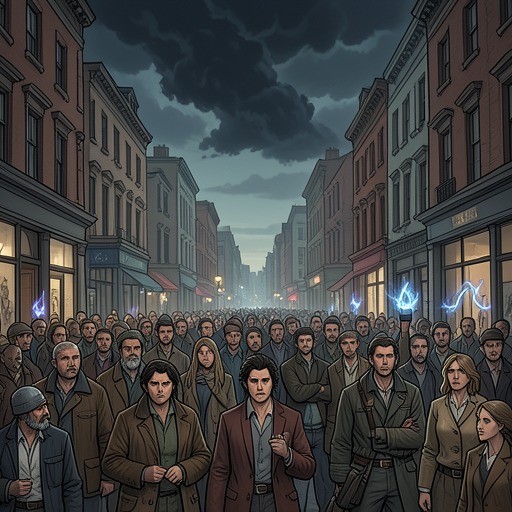
Dorian’s announcement reaches the heroes through a broadcast from the capitol. One viewer recognizes that it is playing on every channel, making the address impossible to treat as a private warning or a message aimed only at the gifted. On camera, Dorian gives an evil smirk, appearing to regard the watching public as toys and to be choosing whom to confront first. The broadcast makes visibility itself part of his power: he addresses the world at once, while the heroes must watch as the conflict they feared becomes public.
Dorian tells the audience that people with powers are among them and are not going anywhere. He rejects the need to remain hidden, presenting the gifted as being set free and inviting the public either to fear them or join them. The declaration recasts concealment as a condition to be ended rather than a protection to be maintained. His phrasing leaves little room for neutrality: people without powers are asked to decide how they will respond to a group Dorian insists is already present and will remain.
The Eclipse as a Deadline and Promise
The promised beginning is tied to a precise event: tomorrow will bring the solar eclipse of the century. Dorian predicts that darkness will cover the earth and that the age of the gifted will begin. This links his political claim to the eclipse, giving his announcement a deadline and a dramatic image of transformation. Darkness is not presented simply as a temporary astronomical condition; in Dorian’s address, it becomes the sign under which the gifted will enter a new era.
The speech also makes clear that Dorian expects resistance. He directly challenges the heroes to stop his side, warning that they will lose everything if they do. The threat turns the broadcast from a declaration of identity into an ultimatum: the gifted’s public release is bound to an impending struggle, and the heroes are named as the force standing in its way. The address does not merely describe a possible future; it attempts to set its terms before the eclipse arrives.
Immediate Consequences
For the heroes, the broadcast confirms that the period of secrecy has ended. One character calls it the moment darkness has finally come, then looks to Rose; they share the wish that they had more time to be happy together. That private exchange sets the promise of Dorian’s public new age against the personal happiness it threatens to interrupt. The peace of the moment is over, and the characters turn to preparing for war.
Dorian’s words thus have an immediate consequence before the eclipse itself: they force the conflict into the open and mobilize those who intend to oppose him. The heroes’ response is not to accept his invitation or his timetable, but to ready themselves to fight. The age he announces is therefore contested from its first public appearance, shaped as much by resistance as by his claim to liberation.
Reversal and the Unsettled Future
After the supernatural war, the world is restored to normal. The sky is blue, the sun is shining, and people walk around as if they had not been part of a supernatural conflict. Phillip explains that people without gifts do not remember what happened; among the rest, memory varies. This altered aftermath complicates Dorian’s earlier address: the public revelation has occurred, but ordinary people’s recollection of the events that followed is erased by the reversal.
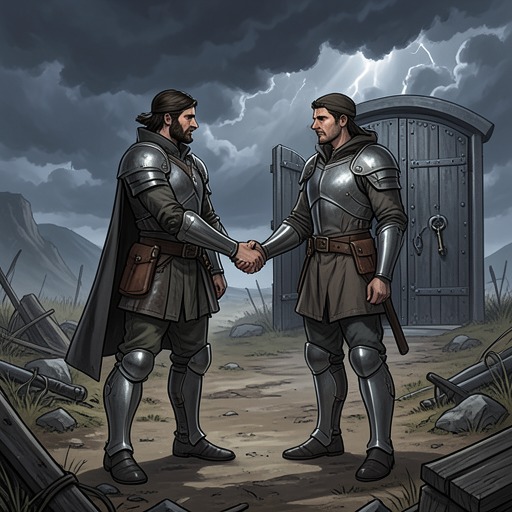
Phillip places the survivors in Seahill one year before Dorian left the city in chaos, and explains that there is no duplicate version of Dorian in this time because his body and earlier self have merged. He invites Dorian to help make the Hero Society better than it had been. Dorian does not accept immediately; the invitation can wait. The ending therefore does not simply confirm the age Dorian promised or erase the danger he represented. Instead, the public declaration remains a defining rupture, while the reset offers its former antagonist a choice about what kind of future to help build.
Meaning of the Phrase
The age of the gifted names both a political claim and an imminent confrontation. Dorian presents the end of concealment as freedom, but he couples that freedom with a warning to the heroes and a forecast of darkness. The speech’s force lies in making a hidden population publicly legible while framing the transition as a struggle over who will determine what follows.
The later return to Seahill, with ordinary people unaware of the supernatural war, prevents the phrase from settling into a straightforward account of a new social order. Dorian’s declaration changes the story by making secrecy untenable and war immediate; the time reversal then leaves its larger political promise open. What follows is no longer only a question of whether the gifted will be revealed, but whether Dorian, invited into a renewed Hero Society, will help shape a different future from the one his broadcast threatened to impose.